
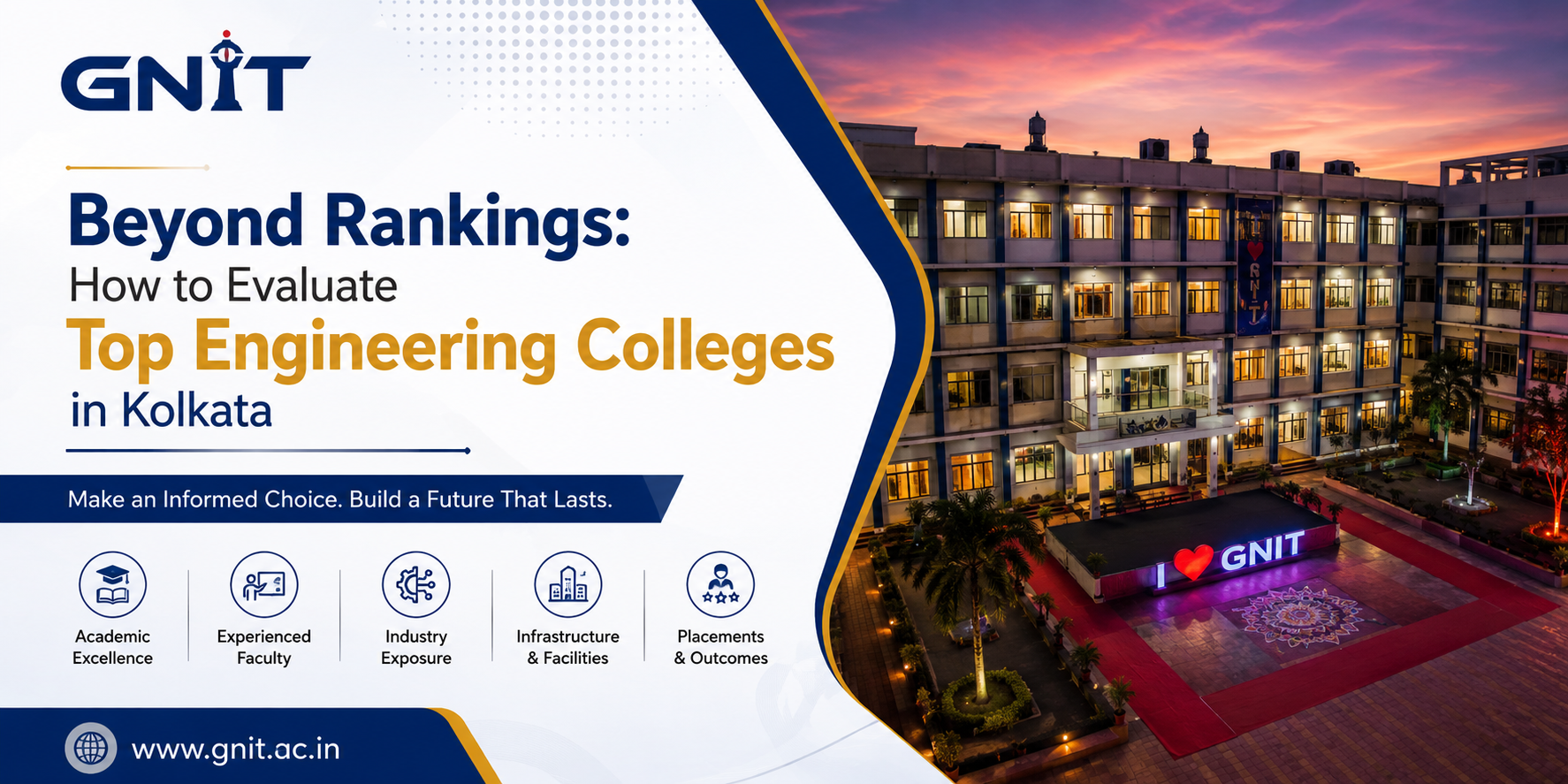
Choosing an engineering college is one of the most important decisions in a student's life. Every year, thousands of students and parents search for rankings, placement statistics, and admission cut-offs. While rankings can provide a useful starting point, they don't tell the complete story.
Imagine two students joining different colleges. One chooses a college solely because of its ranking, while the other evaluates faculty quality, industry exposure, infrastructure, and career opportunities. Four years later, the second student often has a stronger professional network, better practical skills, and more career options.
This is why students looking at the top engineering colleges in Kolkata should go beyond rankings and focus on factors that truly influence learning, employability, and long-term career growth. With engineering education evolving rapidly in 2026, making an informed choice is more important than ever.
Why Rankings Alone Are Not Enough
College rankings are based on multiple parameters such as academic performance, research output, faculty strength, and institutional reputation. While these indicators are valuable, they may not reflect individual student needs.
A college ranked lower may offer:
- Better industry exposure
- Stronger placement support
- More practical learning opportunities
- Specialized engineering programs
- Better student mentoring
Instead of asking, "What is the rank?" students should ask:
- Will this college prepare me for future jobs?
- Does it offer the specialization I want?
- Are graduates getting quality employment?
- Is the learning environment supportive?
These questions often matter more than a ranking number.
Key Factors to Evaluate in the Top Engineering Colleges in Kolkata
1. Accreditation and Academic Quality
The first step is checking whether the institution is approved and accredited by recognized authorities.
Look for:
- AICTE approval
- UGC recognition
- NAAC accreditation
- NBA accreditation for engineering programs
Accreditation ensures that the curriculum, faculty, infrastructure, and academic standards meet national benchmarks.
Parents should always verify accreditation before considering admission.
2. Engineering Programs and Specializations
Not all colleges offer the same learning opportunities. Students should evaluate available engineering specializations based on their interests and career goals.
Popular engineering disciplines in 2026 include:
| Engineering Stream | Key Career Areas |
| Computer Science and Engineering | Software Development, AI, Data Science |
| Electronics and Communication Engineering | Embedded Systems, Telecommunications, IoT |
| Electrical Engineering | Power Systems, Renewable Energy |
| Mechanical Engineering | Manufacturing, Robotics, Automotive |
| Civil Engineering | Construction, Smart Infrastructure |
The best institutions continuously update their curriculum to align with industry needs.
Engineering Colleges with Good Placements: What to Check
Placement statistics are among the most important evaluation criteria.
However, students should go beyond the highest package advertised by a college.
Placement Metrics That Matter
While evaluating engineering colleges with good placements, students should carefully review the institution's placement records rather than focusing only on the highest salary package advertised.
Consider:
- Overall placement percentage
- Average salary package
- Median salary package
- Internship opportunities
- Number of recruiters visiting campus
- Core engineering job opportunities
- Department-wise placement records
Strong placement records over several years often indicate consistent industry trust and better career opportunities for graduates.
For example, a college reporting a 90% placement rate with a strong average package may offer better value than one promoting a single exceptionally high-paying offer.
Skills That Improve Placements
Recruiters increasingly seek students with:
- Communication skills
- Problem-solving abilities
- Coding knowledge
- Teamwork skills
- Leadership qualities
- Project experience
Students should select colleges that actively support skill development alongside academics.
Engineering Colleges with Industry Collaborations: A Critical Advantage
One of the strongest indicators of career readiness is industry engagement.
Why Industry Collaborations Matter
Modern engineering education extends beyond classrooms.
Leading institutions establish partnerships with:
- Technology companies
- Manufacturing firms
- Research organizations
- Startups
- Innovation centers
These collaborations help students gain:
- Internship opportunities
- Live projects
- Industry certifications
- Expert workshops
- Placement support
As industries continue to adopt AI, automation, and digital technologies, engineering colleges with industry collaborations provide students with valuable practical exposure.
Signs of Strong Industry Integration
Look for colleges offering:
- Industry-sponsored labs
- Guest lectures by professionals
- Hackathons and innovation challenges
- Corporate internship programs
- Skill certification courses
These experiences significantly improve employability.
The Growing Importance of Research and Innovation
Engineering is no longer limited to textbooks and examinations.
Today's employers value creativity, experimentation, and problem-solving.
Research Opportunities for Students
Strong institutions encourage:
- Undergraduate research projects
- Patent development
- Technical competitions
- Startup incubation programs
- Innovation labs
The emphasis on research and innovation helps students develop critical thinking skills and prepares them for higher studies or entrepreneurial ventures.
According to industry reports, innovation-driven sectors are expected to generate millions of new technology-related jobs over the coming decade.
Interdisciplinary Education: The Future of Engineering
Technology is becoming increasingly interconnected.
For example:
- AI supports healthcare systems.
- Electronics powers smart cities.
- Mechanical engineering uses data analytics.
- Civil engineering incorporates IoT technologies.
This shift has increased demand for interdisciplinary education.
Benefits of Interdisciplinary Learning
Students gain:
- Broader technical knowledge
- Cross-functional problem-solving skills
- Better adaptability
- Increased career flexibility
Colleges embracing interdisciplinary education often produce graduates who are better prepared for future industries.
Admission Trends for 2026
Engineering admissions are evolving rapidly across India.
Major Trends Students Should Know
- Greater focus on skill-based learning
- Increased adoption of AI and digital technologies
- Stronger industry-academia partnerships
- Growth of multidisciplinary education models
- Rising demand for emerging technology programs
Students evaluating the top engineering colleges in Kolkata should prioritize institutions adapting to these changes.
Step-by-Step Admission Guidance for Students
Step 1: Identify Your Interests
Ask yourself:
- Do I enjoy coding?
- Am I interested in electronics?
- Do I prefer designing machines?
- Am I fascinated by infrastructure development?
Your interests should guide your branch selection.
Step 2: Research Colleges
Compare:
- Accreditation
- Faculty
- Infrastructure
- Placement records
- Industry exposure
Step 3: Check Eligibility
Most B.Tech programs require:
- Physics
- Chemistry
- Mathematics
- Entrance examination qualification
Step 4: Attend Counselling
Participate in:
- State counselling
- Institutional counselling
- Admission guidance sessions
Step 5: Visit the Campus
A campus visit provides insights into:
- Laboratories
- Libraries
- Classrooms
- Student culture
Financial Support and the Students' Credit Card Scheme
The cost of engineering education is an important consideration for many families. Students in West Bengal can take advantage of the Students' Credit Card scheme, which provides financial assistance for higher education through affordable education loans.
Before taking admission, students should check whether the institution offers guidance regarding the Students' Credit Card application process and required documentation. Access to financial support can make quality engineering education more accessible and reduce the financial burden on families.
Career Scope After Different Engineering Streams
Career Comparison Table
| Stream | Popular Careers | Future Demand | Average Starting Salary |
| Computer Science and Engineering | Software Engineer, Data Analyst, AI Developer | Very High | ₹4–10 LPA |
| Electronics and Communication Engineering | Embedded Engineer, Network Engineer | High | ₹3.5–8 LPA |
| Electrical Engineering | Power Engineer, Energy Consultant | High | ₹3–7 LPA |
| Mechanical Engineering | Design Engineer, Production Engineer | Moderate to High | ₹3–6 LPA |
| Civil Engineering | Structural Engineer, Project Engineer | High | ₹3–7 LPA |
Salary figures vary depending on skills, employer, location, and experience.
Skills Employers Seek in 2026 and Beyond
Employers increasingly value both technical and soft skills.
Technical Skills
- Programming
- Data Analytics
- Artificial Intelligence
- CAD Tools
- Simulation Software
Professional Skills
- Communication
- Leadership
- Adaptability
- Collaboration
- Critical Thinking
Students should choose colleges that integrate these competencies into their learning environment.
Future Trends Shaping Engineering Education
Artificial Intelligence Integration
AI is becoming a core technology across industries, creating opportunities for engineers in software, electronics, manufacturing, and infrastructure sectors.
Smart Infrastructure Development
Civil and electrical engineers are increasingly involved in smart city projects and sustainable urban development.
Green Energy Expansion
Renewable energy, electric vehicles, and sustainable power systems are generating strong demand for engineering talent.
Automation and Robotics
Mechanical and electronics engineers benefit from growing automation adoption in manufacturing and industrial operations.
Research-Led Learning
Institutions emphasizing research and innovation are expected to gain greater relevance in future job markets.
Practical Tips for Students and Parents
Before making a final decision:
- Compare multiple colleges.
- Speak with current students.
- Review placement reports.
- Examine long-term placement records.
- Evaluate faculty qualifications.
- Check industry partnerships.
- Visit the campus if possible.
- Understand available financial aid options, including the Students' Credit Card scheme.
When comparing engineering colleges with good placements, focus on consistent outcomes rather than marketing claims.
Similarly, engineering colleges with industry collaborations often provide stronger real-world exposure that can improve employability after graduation.
Frequently Asked Questions (FAQs)
1. How do I choose the right engineering college?
Evaluate accreditation, faculty, placements, infrastructure, industry exposure, and specialization options rather than relying only on rankings.
2. Are placement records more important than rankings?
Both are important, but strong placement records often provide a clearer picture of student outcomes and career opportunities.
3. What engineering branch has the highest demand in 2026?
Computer Science, Electronics and Communication Engineering, Electrical Engineering, and AI-related fields continue to show strong demand.
4. Why are industry collaborations important?
They provide internships, projects, certifications, and practical learning experiences that improve employability.
5. What is interdisciplinary education in engineering?
It combines knowledge from multiple disciplines to solve complex real-world problems.
6. Can research opportunities help my career?
Yes. Participation in research and innovation projects develops problem-solving and analytical skills valued by employers and universities.
7. Can students apply for financial assistance through the Students' Credit Card scheme?
Yes. Eligible students in West Bengal can apply for the Students' Credit Card scheme to support higher education expenses.
Conclusion
Selecting an engineering college is about much more than rankings. Students should evaluate accreditation, faculty expertise, industry exposure, infrastructure, specialization options, placement records, and opportunities for research and innovation. The best institutions are those that prepare students for future careers through practical learning, interdisciplinary education, and strong industry engagement.
When exploring the top engineering colleges in Kolkata, focus on the factors that truly influence academic growth and career success. Compare colleges carefully, review placement records, understand financial support options such as the Students' Credit Card scheme, and explore opportunities for industry exposure before making a decision.
Take the next step toward your engineering career by exploring courses, connecting with admissions teams, attending counselling sessions, and finding a college that aligns with your goals and aspirations.