NAAC A+ NAAC A+
JIS Group JIS Group
AICTE Approved UGC | NBA Accredited
Sodepur, Kolkata North 24 Parganas, WB

Information Technology (IT)

Information Technology (IT)

98% Graduation Rate MAKAUT Affiliated 60 Student Intake

Top Information Technology (IT) College in Kolkata for B.Tech Courses and Research Excellence

As a specialized sub-domain of Computer Science, Information Technology (IT) emphasizes the practical application of computing principles for storing, processing, transmitting, and managing data. At our IT college in Kolkata, the focus is on equipping students with the knowledge and skills necessary to apply these concepts in real-world scenarios across various domains.

Since its establishment, the department has earned a reputation for academic excellence and cutting-edge research. Students pursuing an IT course in Kolkata here benefit from a dynamic research environment, with active groups working in areas such as Artificial Intelligence, Bioinformatics, Complex and Social Networks, Data and Web Mining, and Software Engineering. Our graduates are consistently recruited by top companies and pursue higher studies at premier institutions, with many alumni holding prestigious positions around the globe.
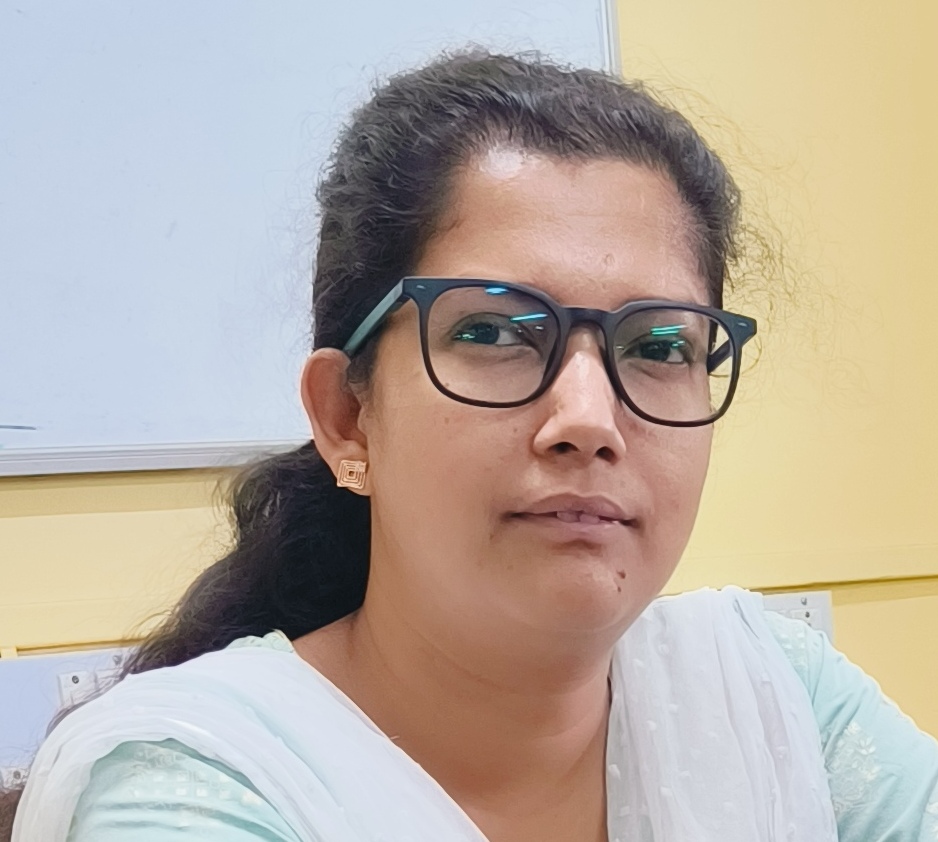
HOD's Message

Head of Department — IT, GNIT
Head of Department

Dr. Sudeep Ghosh

Head of Department, IT, Guru Nanak Institute of Technology, Kolkata

Welcome to the Department of Information Technology, established in 2007 with a vision to nurture innovative, skilled, and socially responsible technology professionals.

Our department is committed to providing a dynamic learning environment where academic excellence, industry exposure, research, and innovation go hand in hand. Our experienced and dedicated faculty members continuously engage students through innovative teaching, industry training, seminars, workshops, expert interactions, and hands-on learning.

Research and innovation are key pillars of our department. Our faculty members and students actively work in emerging areas such as Artificial Intelligence and Machine Learning, Cybersecurity, Cryptography and Information Security, Blockchain, Internet of Things, Data Science, and Privacy-Preserving Technologies. Our research contributions include publications in reputed national and international journals and conferences, along with participation in research and innovation-oriented activities.

The department has established collaborations with reputed organizations through MoUs and has also received support from the Department of Science, Technology and Biotechnology (DSTBT), Government of West Bengal, for academic initiatives in emerging technologies.

We strongly believe in learning beyond the classroom. Our ACM Student Chapter and technical areas such as Cyber Security, Robotics, Machine Learning, and emerging technologies provide students with opportunities to develop technical expertise, creativity, leadership, and problem-solving skills. Our students have also achieved recognition in national and international hackathons, coding competitions, and other technical events. Along with technical education, we focus on the holistic development of our students through co-curricular and extracurricular activities, student publications, seminars, workshops, and various departmental initiatives. We are equally proud of our alumni, who are making significant contributions to the IT industry, research, and prestigious organizations across the globe.

As we move forward, our aim is to build a research-driven, innovation-oriented, industry-connected, and globally competitive department where every student is encouraged to learn, explore, innovate, and make a meaningful impact on society.

Together, let us learn, innovate, and shape the future of technology.

Vision & Mission

Vision

Departmental Vision

The vision of the Information Technology is to make leaders in Information Technology education in support of teaching and learning, and also to be the preferred source of quality technology education, research and community services delivery for the local, national and international levels.

Mission

Departmental Mission

  • DM-1:To build a quality and cutting edge technology infrastructure.
  • DM-2:Deliver quality, prompt and reliable technology education services.
  • DM-3:Establish and maintain an effective academic environment for students.
  • DM-4:Engage in emerging research areas and establishing leadership.
  • DM-5:Contribute to the community services at large as well as catering to socio-economic goals in local and national levels.

Ready to Build Your Future with GNIT?

Join one of the Best Engineering Colleges in Kolkata for Future Innovators

APPLY NOW CALL NOW VIEW FAQs

Program Educational Objectives, Outcomes & PSOs

1
PEO 1: To prepare students to excel in graduate school or technical careers through a world-class, rigorous and competitive program in the field of Information Technology.
2
PEO 2: To train students across the spectrum of basic and applied science, recognizing and exploiting common descriptions in disparate systems.
3
PEO 3: To train students with sufficient scientific and Information Technology breadth to design and create novel solutions to real-life problems in computing domain.
4
PEO 4: To develop students professional and ethical attitudes, effective communication and teamwork skills, and an ability to place science and computational issues and solutions within the broader societal context.
5
PEO 5: To provide students with an academic environment committed to excellence and innovation that contributes for developing role ready individual with leadership, professionalism, and life-long learning for professional careers in the field of Information Technology.
1
PO1: Engineering knowledge: Graduates will be able to apply the basic knowledge in Mathematics, Science and Engineering fundamentals in the domain of Information Technology.
2
PO2: Problem analysis: Graduates will demonstrate the ability to design, develop and test systems corresponding to real life problems under consideration including the physical models, interpret and analyze data, and report results and use experimental results for further expansion.
3
PO3: Design/development of solutions: Graduates will demonstrate the ability to design a digital system or a computational system or a process that meets demand driven specifications and requirements in Information Technology and research areas.
4
PO4: Conduct investigations of complex problem: Graduates will have the ability to identify, formulate and solve service oriented architectural problems.
5
PO5: Modern tool usage: Graduates will be familiar with state-of–the-art software tools and to analyze relevant engineering problems.
6
PO6: The engineer and society: Graduates will be broadly educated and will have an understanding of the impact of engineering on society and demonstrate awareness of contemporary and emergent issues.
7
PO7: Environment and sustainability: Graduates will have the confidence to apply engineering solutions in global and societal contexts.
8
PO8: Ethics: Graduates will demonstrate an understanding of their professional and ethical responsibilities.
9
PO9: Team work: Graduates will foster team spirit and elevate the enthusiasm in teamwork-concept of sharing in demonstrating their ability in technological solution as a part of specialized engineering and science laboratory teams, as well as on multidisciplinary design teams.
10
PO10: Communication: Graduates will be able to communicate effectively in both verbal and written forms.
11
PO11: Project Management and Finance: Understand the engineering and management principles and apply these to one’s own work as a member and leader of a team to manage projects and in multidisciplinary environment.
12
PO12: Life-long learning: Graduates should be capable of self-learning and clearly understand the value of lifelong learning.
1
PSO 1: Graduates will be able to apply basic engineering knowledge to understand and analyze basic-complex problems in the field of Information Technology.
2
PSO 2: Graduates will be able to provide optimized solutions for organizations and individuals through Information Technology specific skills.
3
PSO 3: Graduates will be able to work in a group to manage projects and human resources in the field of Information Technology.
4
PSO 4: Graduates will be able to contribute in the research and development field of Information Technology through the lifelong learning to serve the society and nation.
Admissions Open 2026
Counselling - WBJEE