 NAAC A+
 JIS Group
Leading B.Tech Electrical Engineering (EE) College in Kolkata
The Department of Electrical Engineering at Guru Nanak Institute of Technology (GNIT), affiliated with MAKAUT-West Bengal (formerly WBUT), has been delivering exceptional academic services since its inception in 2003. Recognized for its excellence, the department has been National Board of Accreditation (NBA) accredited consecutively in 2009 and 2014, reflecting its superior standards in technical education.
For those exploring Electrical Engineering colleges in Kolkata, GNIT stands out with its experienced faculty, many of whom hold Doctoral degrees (Ph.D.), and a dedicated team of technical staff. The department boasts state-of-the-art laboratories equipped with high-value hardware setups and industry-standard software packages, offering students a comprehensive learning experience.
The Electrical Engineering courses in Kolkata, specifically the B.Tech in Electrical Engineering (EE), are designed to provide world-class education, enabling students to bridge the gap between academic knowledge and real-world application. The curriculum focuses on equipping future engineers with the skills necessary for interdisciplinary research and innovative projects.
To ensure that graduates are industry-ready, the department organizes regular industry visits, soft skill and aptitude classes, and GATE/PSU preparation sessions, making it one of the top choices for those pursuing a B.Tech in EE.
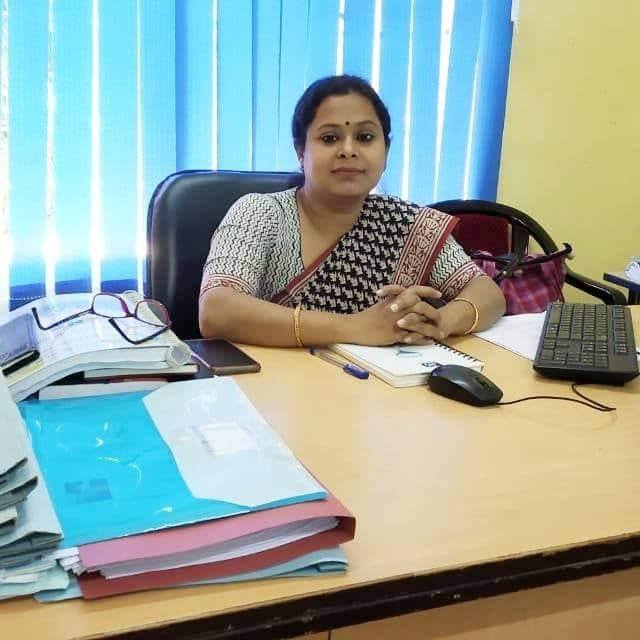
Guru Nanak Institute of Technology, Kolkata
Electrical Engineering was introduced in the year 2003 at our esteemed institution, Guru Nanak Institute of Technology, Sodepur Kolkata with a key objective and aim of providing both fundamentals and Industry ready programs in this field by nurturing the students to deep-dive in their fields of interest and also motivating them to excel.
In this direction, the department provides an excellent environment for its students and faculties to work with zeal and enthusiasm with an aim to give their best. The department also provides facilities to carry out research in the emerging technology areas. The course has a healthy blend of Power system, Control System, Power Electronics and Drives, Renewable Energy and programming languages like Python JAVA etc. The commitment and passion for learning and teaching by the students as well as faculties will definitely lead our future budding engineers to be industry ready. The course pattern is planned to keep the students up-to-date with recent trends by organizing regular trainings, e-learning, industrial visits, workshops, conferences, faculty development programs, etc. The students are provided a platform to think, express, and exhibit their skills.
With qualified and experienced senior faculty members, the department is boost of rich academic delivery both theory and practical. The sophisticated labs of the department like Power Electronics, Electrical Machines, with software like MATLAB, ETAP, PSIM, Mi-POWER, LABVIEW help students to simulate and emulate with the real time problems in a more practical way.
The department in association with professional bodies conducts various programs such as Workshops, Technical Training, Guest Lectures and Seminar by Experts from Industry and Academic background for constant knowledge up-gradation of staff and students. This activity helps to know the latest technologies, in the field of Electrical Engineering.
I am extremely happy to be associated with this department, one of the core and oldest branch of Engineering. I thank our management, researchers, teachers, alumni and students for their continuous support and cooperation.
We continue to play a leading role in our discipline which leads us towards creating innovative and effective professional graduate community which would vivacious and provide continuous learning. I extend my warm wishes to all budding Electrical Engineers.
I wish the very best for my faculties and students.
To produce new generation technologists and entrepreneurs with creative minds, innovation and advanced research by inculcating world class education to meet industry expectations and impart sustainable growth of the society in global perspective.
Join one of the Best Engineering Colleges in Kolkata for Future Innovators
Fill in your details and our team will reach out to you shortly.
Thank you! Our admissions team will contact you. Best wishes for your academic journey at GNIT.
Your details are safe with us. No spam, ever.
Guru Nanak Institute of Technology will hold its Degree Award Distribution Ceremony on 26th September 2026. Students who passed out in 2023, 2024 & 2025 across all autonomous degree programmes must register in advance to attend.
Registration is mandatory. Late or spot registrations will not be entertained.