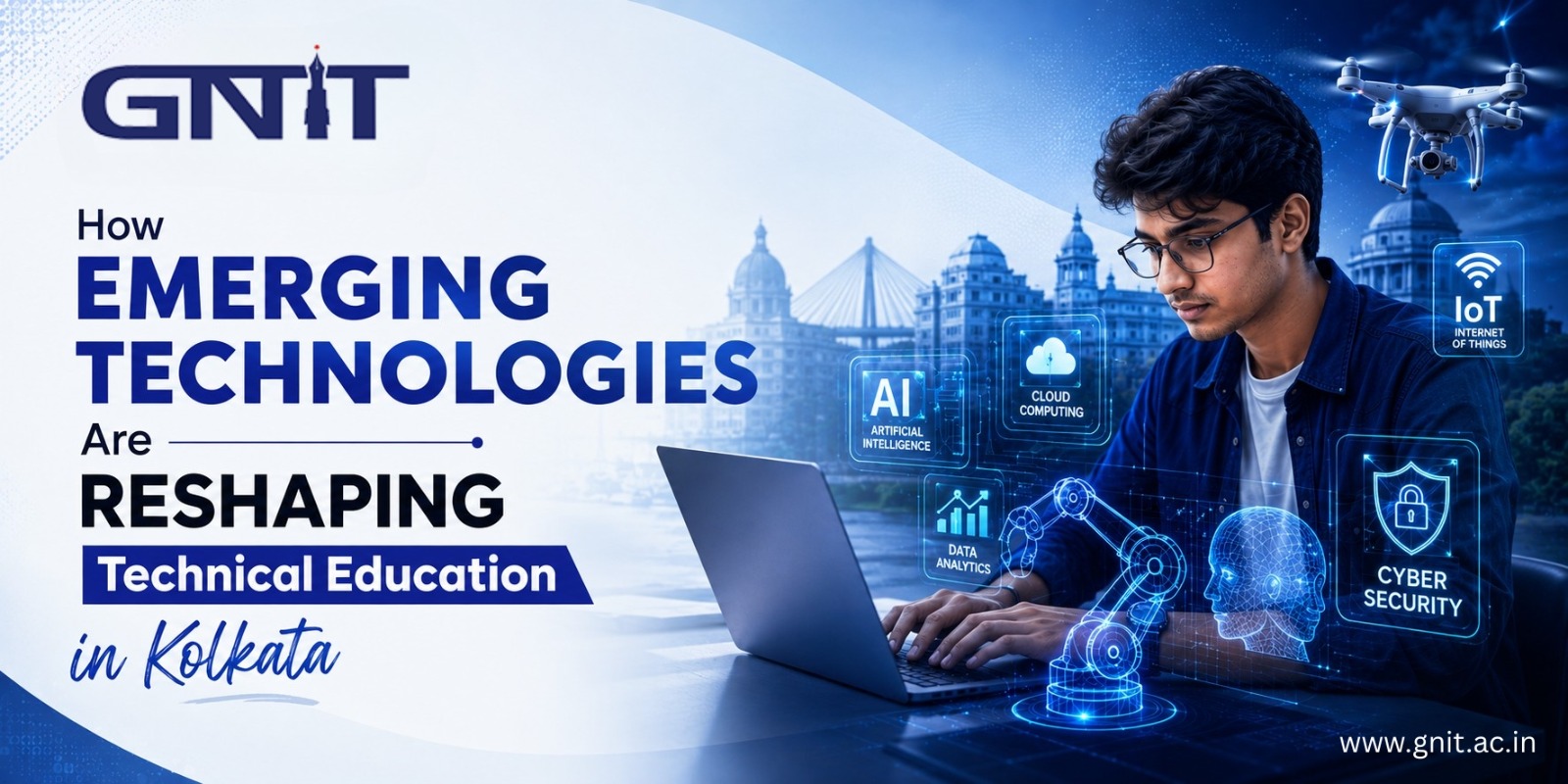
Imagine a student who starts an engineering course today and graduates four years later. By the time they enter the job market, some of the tools and technologies they learned in their first year may already have evolved significantly. Artificial intelligence, robotics, cloud computing, cybersecurity and data analytics are changing industries at a rapid pace. As a result, top engineering colleges in Kolkata are increasingly focusing on practical learning, industry exposure and future-ready skills alongside traditional classroom education.
For students planning their academic journey in 2026, choosing an engineering college is no longer only about selecting a popular branch. It is also about understanding how well an institution prepares students for an evolving technology-driven workplace.
Why Emerging Technologies Are Changing Engineering Education
Traditional engineering education has largely focused on classroom lectures, laboratory work, examinations and theoretical concepts. These fundamentals remain important, but employers now expect graduates to demonstrate practical skills as well.
Emerging technologies are creating new requirements across almost every sector. A mechanical engineer may work with automation and robotics. A computer science graduate may need knowledge of AI and cloud platforms. Electronics engineers may work on Internet of Things devices, while civil engineers increasingly use digital modelling and smart construction tools.
This shift is encouraging top engineering colleges in Kolkata to rethink how technical education is delivered.
Some of the biggest changes include:
- Project-based learning
- Virtual and remote laboratories
- AI-supported learning platforms
- Industry-oriented curriculum
- Interdisciplinary specialisations
- Hackathons and innovation challenges
- Internships and live projects
- Greater focus on communication and problem-solving skills
The goal is simple: students should not only understand technology but also learn how to apply it to real-world problems.
Artificial Intelligence Is Becoming Part of Every Engineering Stream
Artificial intelligence is one of the biggest forces reshaping technical education. Earlier, AI was primarily associated with computer science. Today, its applications can be found in healthcare, manufacturing, finance, transportation, agriculture and many other industries.
Students are increasingly being introduced to concepts such as:
- Machine learning
- Deep learning
- Data analytics
- Natural language processing
- Computer vision
- AI ethics
- Automation
For example, a student working on a smart traffic management project may combine programming, sensors and AI models. Similarly, AI can help mechanical engineering students predict equipment failures through predictive maintenance.
This is why many top engineering colleges in Kolkata are expanding opportunities for students to learn emerging technologies through specialised courses, laboratories, projects and industry collaborations.
Career Opportunities in AI and Data-Driven Fields
Students who develop relevant technical skills may explore roles such as:
- AI/ML Engineer
- Data Analyst
- Data Scientist
- Business Intelligence Analyst
- Automation Engineer
- Software Developer
- AI Product Specialist
Salary potential can vary widely depending on skills, employer, location and experience. Entry-level technology roles may offer moderate packages, while professionals with strong programming, data and AI expertise can progress into significantly higher-paying positions.
However, students should remember that learning a technology alone is not enough. Employers increasingly value the ability to solve problems, work with teams and apply knowledge in practical situations.
Cloud Computing and Cybersecurity Are Creating New Learning Priorities
Businesses, government organisations and startups are increasingly dependent on digital infrastructure. This has increased the importance of cloud computing and cybersecurity.
Students now benefit from understanding:
Cloud Computing
Cloud technology allows organisations to access computing resources such as storage, servers and software through online platforms.
Important skills include:
- Cloud architecture fundamentals
- Virtualisation
- Database management
- DevOps basics
- Containerisation
- Cloud security
Cybersecurity
As digital systems grow, protecting data and infrastructure has become essential. Students interested in this field may learn about:
- Network security
- Ethical hacking concepts
- Security operations
- Data protection
- Digital forensics
- Risk management
These areas are creating new engineering career opportunities, particularly for students who combine technical knowledge with continuous learning.
Robotics, Automation and the Rise of Smart Manufacturing
Automation is transforming industries ranging from manufacturing and logistics to healthcare and agriculture.
Robotics education is no longer limited to advanced research laboratories. Students can now gain exposure to automation through practical projects involving sensors, controllers, embedded systems and programming.
A simple student project might involve building:
- An automated irrigation system.
- A warehouse sorting prototype.
- A line-following robot.
- A smart home device.
- A robotic arm for basic industrial tasks.
Such projects help students connect theoretical concepts with practical applications.
For this reason, top engineering colleges in Kolkata are increasingly encouraging innovation cells, technical clubs, robotics activities and interdisciplinary project work.
2026 Admission Trends: What Students Should Expect
The 2026 admission cycle is expected to reflect growing student interest in future-oriented engineering specialisations. While traditional branches such as Computer Science, Mechanical, Civil and Electronics remain important, students are also exploring programmes and specialisations connected to:
- Artificial Intelligence
- Data Science
- Cybersecurity
- Robotics
- Internet of Things
- Cloud Computing
- Semiconductor technology
- Automation
At the same time, students should avoid choosing a course solely because it is trending. A good decision should consider personal interests, aptitude, academic strengths and long-term career goals.
Understanding BTech Eligibility Criteria
The exact BTech eligibility criteria may vary depending on the institution, programme and admission pathway. Generally, students are expected to complete Class 12 with relevant subjects such as Physics, Mathematics and other required subjects specified by the college or university.
Entrance examinations, counselling procedures and institutional admission requirements may also apply.
Before applying, students should carefully check:
- Academic eligibility
- Required entrance examinations
- Minimum marks
- Counselling requirements
- Document requirements
- Application deadlines
Students should always verify the latest admission requirements directly through official college, university and regulatory websites.
Step-by-Step Guide for BTech Admission in Kolkata
Planning BTech admission in Kolkata can feel complicated, especially for first-time applicants. Breaking the process into clear steps can make it easier.
Step 1: Identify Your Interests
Ask yourself:
- Do I enjoy coding?
- Am I interested in machines and automation?
- Do I like electronics and communication systems?
- Am I interested in infrastructure and construction?
- Do I enjoy working with data and analytical problems?
Your answers can help narrow down suitable engineering streams.
Step 2: Research Colleges and Approvals
Look for institutions that provide a strong academic environment, relevant infrastructure and industry exposure. Students should also check whether programmes and institutions meet applicable regulatory and accreditation requirements.
While researching AICTE approved engineering colleges in Kolkata, students should verify approval and institutional information from official sources rather than relying only on advertisements or third-party listings.
Step 3: Compare Curriculum and Learning Opportunities
Do not compare colleges only by fees or rankings. Look at:
- Course curriculum
- Laboratories
- Faculty expertise
- Internship opportunities
- Industry partnerships
- Placement support
- Innovation and research facilities
- Student projects
Step 4: Understand the Admission Process
For BTech admission in Kolkata, keep track of entrance examinations, counselling schedules and institution-specific application procedures.
Prepare documents such as academic records, identity documents, photographs and relevant entrance examination details in advance.
Step 5: Visit the Campus if Possible
A campus visit can help students and parents understand the learning environment better. Ask questions about laboratories, student activities, internships, hostel facilities and career support.
Course Comparison: Which Engineering Stream May Suit You?
| Course Stream | Typical Eligibility | Career Scope | Emerging Technology Connection | Salary Potential* |
| Computer Science Engineering | Class 12 with required subjects | Software, AI, Data, Cloud | Very High | High |
| AI & Data Science | Class 12 with Mathematics | AI, Analytics, ML | Very High | High |
| Electronics & Communication | Class 12 with Physics and Mathematics | Embedded Systems, IoT, Telecom | High | Moderate to High |
| Mechanical Engineering | Class 12 with Physics and Mathematics | Manufacturing, Automotive, Robotics | High | Moderate to High |
| Civil Engineering | Class 12 with Physics and Mathematics | Construction, Infrastructure, Smart Cities | Growing | Moderate to High |
| Cybersecurity-focused pathways | Usually through CSE/IT-related programmes | Security, Risk, Digital Forensics | Very High | High |
*Salary potential depends on factors such as skills, employer, location, role and experience. Students should treat salary figures and industry trends as indicators rather than guarantees.
Affordable Education and the Importance of Value
Students and parents often search for affordable engineering colleges in Kolkata, but affordability should not be judged only by the tuition fee.
A lower fee may be attractive, but students should also consider the overall value of education. Important factors include:
- Quality of laboratories
- Academic support
- Internship access
- Placement preparation
- Industry exposure
- Scholarships or financial assistance
- Transportation and accommodation costs
When comparing affordable engineering colleges in Kolkata, calculate the total educational investment rather than focusing only on the advertised course fee.
How Top Engineering Colleges in Kolkata Are Adapting to Industry Needs
Technology changes faster than traditional academic cycles. This creates a challenge for educational institutions: how can students learn current skills without losing the strong engineering fundamentals needed for long-term careers?
The answer increasingly lies in a combination of foundational education and flexible skill development.
Many top engineering colleges in Kolkata are strengthening student learning through:
Industry Projects
Instead of working only on textbook assignments, students can gain experience by solving practical problems.
For example, a team may develop:
- An AI-based attendance system
- A smart energy monitoring solution
- A cybersecurity awareness application
- An IoT-enabled agriculture prototype
Internships
Internships help students understand workplace expectations. They also allow students to improve communication, teamwork and technical problem-solving.
Hackathons and Innovation Challenges
These activities encourage students to think creatively under time constraints. They also provide exposure to real-world challenges.
Interdisciplinary Learning
Modern problems rarely belong to only one academic field. A smart healthcare device, for example, may require knowledge of electronics, software, data analysis and design.
This makes interdisciplinary learning increasingly valuable.
Skills Employers Are Likely to Seek in 2026 and Beyond
Technical knowledge remains essential, but employers are also looking for graduates who can adapt.
Students should focus on developing:
Technical Skills
- Programming
- Data analysis
- AI and machine learning fundamentals
- Cloud computing
- Cybersecurity awareness
- Automation tools
- Engineering software relevant to their branch
Human Skills
- Communication
- Critical thinking
- Teamwork
- Creativity
- Adaptability
- Time management
- Problem-solving
The strongest graduates will often be those who can combine technical expertise with the ability to understand real-world problems.
Future Trends in Technical Education
The future of technical education will likely become more personalised, practical and technology-driven.
1. AI-Supported Learning
AI tools may help students receive personalised learning support, practice technical concepts and identify knowledge gaps.
2. Virtual and Remote Laboratories
Students may increasingly use simulations and virtual environments to understand complex engineering systems.
3. Micro-Credentials and Certifications
Alongside a degree, students may pursue short-term certifications in specialised areas such as cloud computing, cybersecurity or data analytics.
4. Greater Industry-Academia Collaboration
Companies are likely to play a larger role in curriculum development, internships and practical training.
5. Lifelong Learning
Graduation will no longer mean the end of education. Engineers will need to regularly update their skills throughout their careers.
These trends are making the selection of top engineering colleges in Kolkata more important for students who want exposure to both academic fundamentals and evolving industry practices.
Practical Tips for Students and Parents
Here are a few actionable recommendations before selecting an engineering programme:
- Look beyond rankings. Rankings can be useful, but they should not be the only deciding factor.
- Check official approvals and recognition. Verify information through regulatory and institutional websites.
- Study the curriculum. Look for opportunities to learn current technologies without ignoring engineering fundamentals.
- Ask about internships and projects. Practical experience matters.
- Understand placement preparation. Ask how students are supported in developing employability skills.
- Compare total costs. This is especially important when evaluating affordable engineering colleges in Kolkata.
- Choose based on aptitude. A popular course may not always be the right course for every student.
- Start building skills early. Online learning, projects, coding practice and technical communities can complement classroom education.
FAQs
1. How do I apply for BTech admission in Kolkata?
The process may involve meeting eligibility requirements, appearing for applicable entrance examinations, participating in counselling and submitting applications to institutions. Always check the latest official admission notifications.
2. What are the basic BTech eligibility criteria?
In general, students need to complete Class 12 with the required combination of subjects, often including Physics and Mathematics. Exact criteria vary by programme and institution.
3. Which engineering branch has the best career opportunities?
There is no single answer. Computer Science, AI, Data Science, Electronics, Mechanical, Civil and other branches can all offer strong engineering career opportunities depending on industry demand and the student's skills.
4. How can I find AICTE approved engineering colleges in Kolkata?
Use official regulatory and institutional sources to verify approval status. Do not depend only on promotional claims or unofficial listings.
5. Are affordable engineering colleges in Kolkata a good option?
Yes, provided students evaluate the overall value of the programme, including academics, infrastructure, industry exposure and career support.
6. What skills should engineering students learn in 2026?
Students should build strong fundamentals in their chosen discipline while developing digital skills such as programming, AI awareness, data analysis, cloud concepts or cybersecurity, depending on their career goals.
7. How important are placements when choosing a college?
Placements are important, but they should be evaluated alongside curriculum, internships, faculty, infrastructure and opportunities for skill development. A student's own skills, projects and preparation also play a major role in career outcomes.
Conclusion
Emerging technologies are changing not only how industries operate but also how future engineers need to learn. AI, automation, cloud computing, cybersecurity, robotics and data-driven systems are making technical education more practical, interdisciplinary and skills-focused.
For students planning their future in 2026, the right college should provide more than a degree. It should offer an environment where they can build strong fundamentals, experiment with technology, work on real projects and prepare for continuous learning. By carefully comparing top engineering colleges in Kolkata, understanding course options and developing future-ready skills, students can make more confident decisions about their engineering journey.
If you are planning your next academic step, explore available engineering programmes, review the latest admission requirements, contact the admissions team and apply to a course that aligns with your interests and long-term career goals.