Choosing a college today is very different from what it was a few years ago. Students are no longer selecting institutions only based on campus size or degree names. They want practical learning, placement opportunities, technology exposure, and skills that lead to successful careers.
Imagine a student who has just completed Class 12 and is scrolling through hundreds of college websites wondering, “Which college will actually prepare me for the future?” Parents are asking similar questions too: Will my child get a good job? Is the curriculum updated? Are there real industry opportunities?
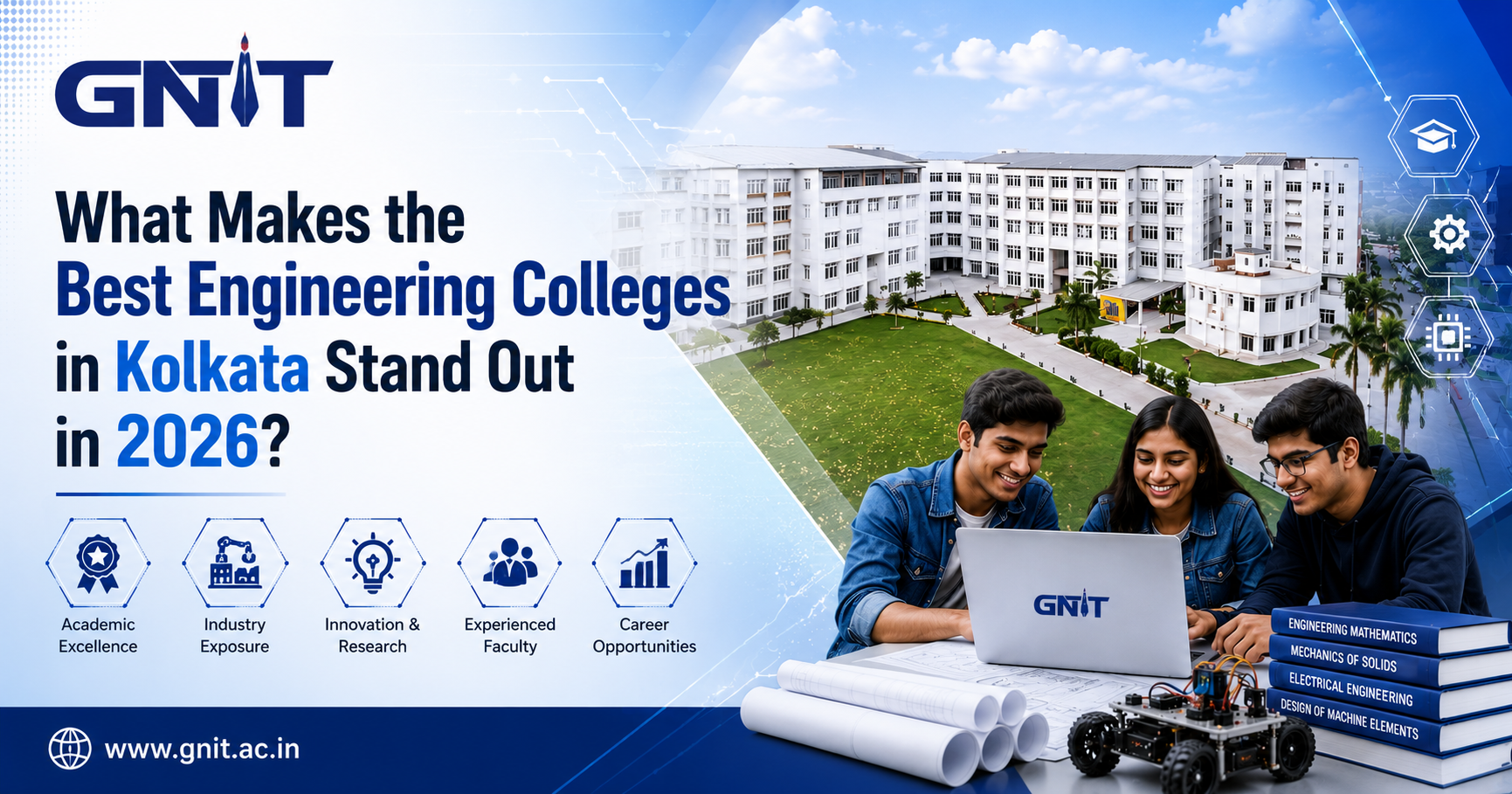
This is exactly why the best engineering colleges in Kolkata are attracting increasing attention in 2026. Modern institutions are evolving rapidly to deliver industry-ready education that prepares students for emerging careers and changing technology trends.
According to recent higher education trends, India continues to experience growing demand for skilled engineers in fields such as Artificial Intelligence, Data Science, Robotics, Cybersecurity, and Sustainable Technology. Students today are searching for institutions that combine quality education with practical learning experiences.
Let us understand what makes certain colleges stand apart.
Why Students Are Choosing the Best Engineering Colleges in Kolkata in 2026
The expectations of students and parents have changed significantly over the last decade.
Today's students look for:
- Industry-focused curriculum
- Modern laboratories
- Placement support
- International exposure
- Research opportunities
- Skill-based learning
- Internship opportunities
- Technology-enabled classrooms
The best engineering colleges in Kolkata are adapting to these expectations by creating learning environments that go beyond textbooks.
Major Admission Trends in 2026
Several trends are shaping engineering education:
- Increased demand for AI and Data Science programs
- Rise of interdisciplinary learning
- Greater focus on skill-based education
- Industry-academia collaborations
- Internship-driven learning
- Global certifications integrated with courses
Students now prefer career-oriented engineering education that directly aligns with industry requirements.
Technology-Driven Engineering Programs Are Reshaping Learning
Traditional classroom learning alone is no longer sufficient.
Modern institutions are offering technology-driven engineering programs that integrate practical tools with theoretical concepts.
Examples of Modern Learning Technologies
- Artificial Intelligence laboratories
- Robotics and automation centers
- Cloud computing labs
- IoT simulation environments
- Smart classrooms
- Virtual laboratories
Students learn by applying concepts rather than memorizing information.
For example, instead of merely studying machine learning algorithms, students may develop predictive models for healthcare systems or smart city projects.
This hands-on experience significantly improves learning outcomes.
How Experienced Faculty Influence Student Success
Faculty members play an important role in student development.
Strong institutions invest in experienced faculty who bring:
- Academic expertise
- Research knowledge
- Industry experience
- Mentorship abilities
- Project guidance
Teachers today act as mentors rather than just instructors.
Students often need guidance for:
- Internship applications
- Research projects
- Competitive exams
- Startup ideas
- Career planning
Good mentorship helps students make informed decisions.
Engineering Specializations With Strong Demand in 2026
Students today have more choices than ever before.
Popular engineering specializations include:
Computer Science Engineering
Career opportunities: Software Developer, AI Engineer, Data Analyst, Cloud Architect
Average starting salary: ₹4–12 LPA
Future demand: Very High
Electronics and Communication Engineering
Career opportunities: Embedded Systems Engineer, Network Engineer, VLSI Engineer
Average starting salary: ₹3–10 LPA
Future demand: High
Mechanical Engineering
Career opportunities: Manufacturing Engineer, Design Engineer, Automation Specialist
Average starting salary: ₹3–8 LPA
Future demand: Moderate to High
Civil Engineering
Career opportunities: Structural Engineer, Construction Manager, Urban Planner
Average starting salary: ₹3–7 LPA
Future demand: Moderate
Artificial Intelligence and Data Science
Career opportunities: Machine Learning Engineer, Data Scientist, AI Researcher
Average starting salary: ₹6–15 LPA
Future demand: Extremely High
The best engineering colleges in Kolkata usually offer diverse specializations aligned with industry requirements.
Course Comparison Table
| Stream | Eligibility | Career Scope | Average Starting Salary |
| Computer Science | PCM in Class 12 | Software, AI, Data Science | ₹4–12 LPA |
| Mechanical | PCM in Class 12 | Manufacturing, Design | ₹3–8 LPA |
| Electronics | PCM in Class 12 | Networking, Embedded Systems | ₹3–10 LPA |
| Civil | PCM in Class 12 | Construction, Infrastructure | ₹3–7 LPA |
| AI & Data Science | PCM in Class 12 | AI, Analytics | ₹6–15 LPA |
Engineering Colleges With Internship Opportunities Matter More Than Ever
Practical learning has become essential.
Many employers now value experience alongside academic scores.
This explains why students increasingly search for engineering colleges with internship opportunities.
Benefits of Internships
- Real workplace exposure
- Better communication skills
- Industry networking
- Resume improvement
- Practical problem-solving abilities
For example: a third-year engineering student working at a technology company may gain exposure to real software projects and industry workflows.
Such experiences often improve placement outcomes.
The best engineering colleges in Kolkata increasingly partner with companies for structured internship programs.
Outcome-Based Education Is Becoming Essential
One major educational shift is outcome-based education.
Instead of focusing only on course completion, colleges now measure:
- Knowledge gained
- Skills developed
- Problem-solving ability
- Practical competency
- Communication skills
Outcome-based education ensures students become employable graduates.
Step-by-Step Guide for Engineering Admission in Kolkata
Many students find admission procedures confusing.
Here is a simplified guide for engineering admission in Kolkata:
Step 1: Research Colleges
Check: Accreditation status, placement records, infrastructure, faculty quality, specializations offered
Step 2: Understand Eligibility Criteria
Generally required: Class 12 with Physics, Chemistry, and Mathematics, plus entrance examination scores.
Common exams: WBJEE, JEE Main, Institution-specific entrance tests
Step 3: Shortlist Preferred Programs
Choose based on: interests, future career goals, market demand
Step 4: Submit Applications
Keep documents ready: academic certificates, entrance scores, identity proof, passport photographs
Step 5: Participate in Counselling
Counselling helps students select colleges based on rank and preference.
Step 6: Complete Admission Formalities
Pay fees and verify documents.
Students looking for engineering admission in Kolkata should begin preparation early.
Skills Employers Want in 2026
Technical knowledge alone is not enough. Employers increasingly prioritize:
Technical Skills
- Programming
- AI tools
- Cloud technologies
- Data analysis
- Automation
Soft Skills
- Communication
- Teamwork
- Leadership
- Critical thinking
- Creativity
Digital Skills
- Data literacy
- Cybersecurity awareness
- Digital collaboration tools
Students receiving career-oriented engineering education often develop these competencies more effectively.
Future Trends in Engineering Education
The future looks exciting.
Emerging Technologies
The next generation of engineers may work with:
- Artificial Intelligence
- Quantum computing
- Green technology
- Robotics
- Blockchain
- Smart manufacturing
Job Market Outlook
Industry experts predict increasing demand for professionals in:
- Data Science
- Cybersecurity
- Automation
- Renewable energy
- Healthcare technology
Higher Education Trends
Future colleges may include:
- Hybrid learning models
- Industry certification programs
- Personalized learning paths
- International collaborations
The best engineering colleges in Kolkata are already preparing students for these changes.
Practical Tips for Students and Parents
Before selecting a college, consider the following:
For Students
- Choose interest over trends
- Explore internship opportunities
- Develop communication skills
- Build project portfolios
- Learn emerging technologies
For Parents
- Focus on long-term career outcomes
- Review placement support
- Check accreditation and rankings
- Encourage practical learning
Small decisions today can create major career impacts tomorrow.
Frequently Asked Questions (FAQs)
1. Which entrance exams are required for engineering admission?
Students generally appear for WBJEE, JEE Main, or institution-level entrance examinations.
2. Which engineering stream has the highest demand in 2026?
Artificial Intelligence, Computer Science, Data Science, and Cybersecurity currently show strong demand.
3. Are internships important during engineering studies?
Yes. Internships provide practical exposure and improve employability.
4. How do I select the right engineering specialization?
Consider your interests, strengths, career goals, and industry demand.
5. Do placement opportunities differ by specialization?
Yes. Placement trends vary depending on industry demand and skills.
6. What skills should engineering students develop?
Students should build technical knowledge, communication skills, teamwork abilities, and problem-solving skills.
Read Now: How to Choose the Right Private Engineering College in Kolkata for B.Tech Admission
Conclusion
Engineering education is evolving rapidly. Students today need more than classroom learning; they need practical skills, mentorship, internships, and future-ready knowledge.
The best engineering colleges in Kolkata stand out because they combine academic excellence with modern learning approaches, industry exposure, and student-focused development strategies.
If you are planning your future, start researching courses, explore specializations, connect with admission teams, and take the next step toward building a successful career journey.